Looksmaxxing Is Not Self-Mastery
Why young men are obsessing over appearance when the real problem runs deeper
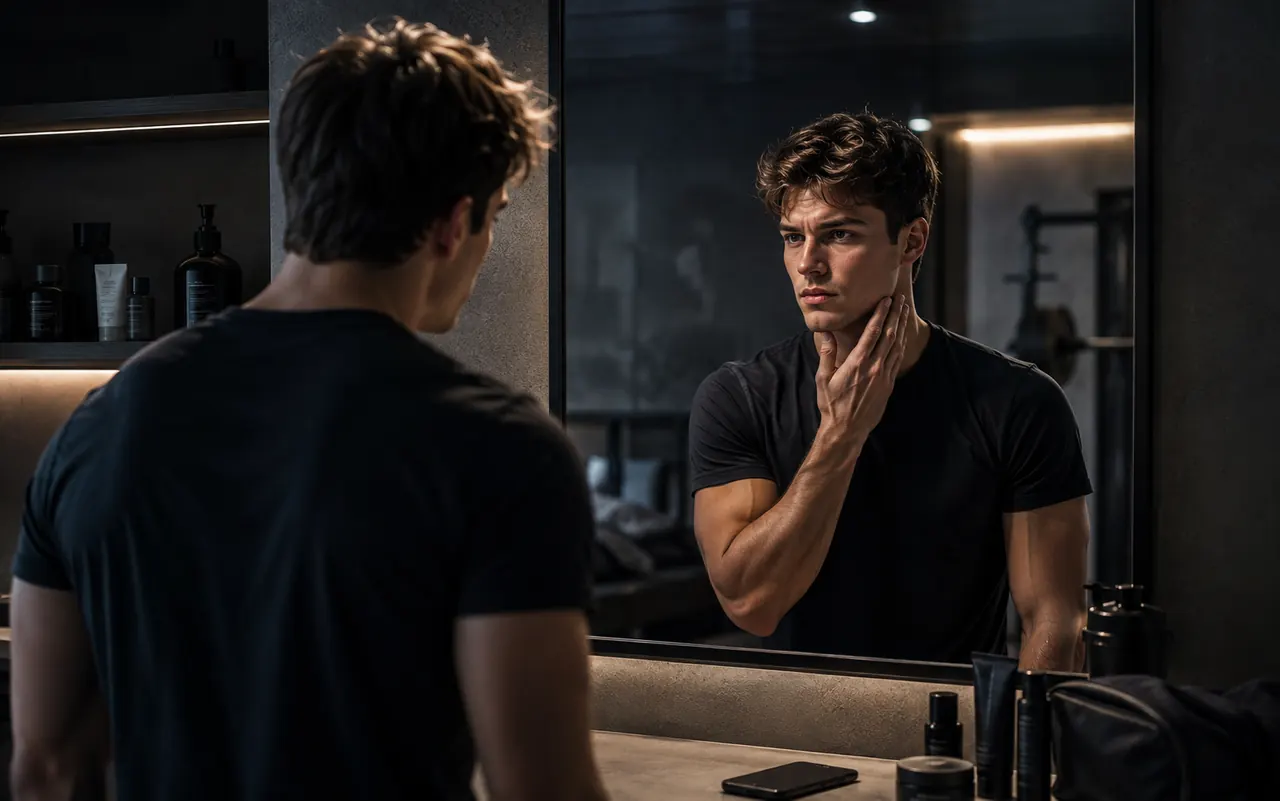
For once, the internet is telling young men something true. Shower properly. Get a haircut that actually suits your face. Lift weights. Fix your posture. Wear clothes that fit instead of whatever was on sale. Take your skin seriously instead of ignoring it until your late twenties.
Nobody sat most of us down and taught us this. A lot of men picked it up late, picked it up badly, or never picked it up at all, and then felt a little embarrassed for caring once they finally noticed.
That is why the early stages of looksmaxxing content do not sound crazy to me. A teenager watching a video about skincare or basic fitness is being told something his father, his school, and most of the men around him never bothered to say out loud. How you present yourself is part of how you move through the world, and it is worth some effort. I believe that. I train, I watch what I eat, I care about how I show up, and none of that has ever felt like vanity to me. It just feels like taking my own life seriously.
Somewhere past the basics, though, the message changes.
It stops being “take care of yourself” and turns into a verdict. Your jawline decides whether people respect you. Your height decides whether you get a real relationship. Your facial symmetry, your bone structure, your hairline, your body fat percentage, all of it gets treated as a hidden scoreboard that quietly decides your whole life, and everything else you might build gets treated as decoration sitting on top of it.
I use social media enough to know exactly how this happens. The algorithm does not care whether a video makes you feel better or worse about yourself. It only cares whether you keep watching, and comparison keeps people watching better than almost anything else does. So the feed keeps sending you the sharpest jaw, the leanest waist, the most symmetrical face it can find, until your own reflection starts to feel like a rough draft that never gets finished.
There is a name for the harmless end of this and a name for the dangerous end, and the difference matters. Softmaxxing is skincare, grooming, fitness, posture, sleep, better-fitting clothes, basically self-respect with a trendy name attached. Hardmaxxing is a different animal: cosmetic surgery, jaw implants, limb-lengthening procedures, unregulated peptides, steroids, and in its most extreme corners something called bonesmashing, where guys hit their own cheekbones with a blunt object hoping the bone remodels into something more prominent. Healthline has covered that split, and it matters because the same word, looksmaxxing, gets used for a guy who started going to the gym and a guy injecting himself with something bought off an unregulated forum.
The trend has lived in internet forums for years, but it went mainstream fast, mostly through TikTok, in the early 2020s. PBS News has reported on how a hobby that starts with grooming tips and skincare routines increasingly pulls young men toward the belief that their appearance is the single biggest factor deciding their worth, their romantic chances, and their standing with other people. Once that belief takes hold, softmaxxing and hardmaxxing stop being a spectrum of risk. They become one long project with no finish line, because there is always another measurement to fail.
You can see the shift in the behavior itself. A man who wants to look better trains, eats reasonably well, and dresses with some intention. A man caught in looksmaxxing starts measuring his facial angles, screenshotting his own jaw under different lighting, running his photos through rating apps, and posting himself on forums to be scored out of ten by strangers who owe him nothing.
That last part is worse than it sounds. A recent national report from the Centre for Young Lives found that rating and advice communities aimed at teenage boys are often brutal on purpose, with participants regularly insulted, unfavorably compared to other men, or told outright to give up. The same report tracked how the content escalates, moving from ordinary gym and skincare advice into extreme dieting, steroid cycles, and a wider online world that treats women with open contempt, and found that membership in one major looksmaxxing forum had doubled in a single year. That does not mean every boy watching a grooming video is being pulled somewhere dark, but it means the on-ramp is a lot shorter than most parents assume.
Fitness content does its own version of the same thing. Researchers at Flinders University showed young men just three minutes of TikTok fitness and supplement content and found it left them feeling worse about their own bodies and more interested in supplements they did not actually need, according to the coverage. A separate look at thousands of #GymTok videos found the most muscular content also pulled the most engagement, meaning the algorithm quietly rewards the exact comparisons that make men feel worse, because that content simply performs better than anything sustainable ever will.
That is what makes this different from a magazine putting a fitness model on the cover thirty years ago. This version is personalized, endless, and updated in real time based on whatever keeps you watching, not whatever is actually good for you.
I do not think every young man who gets into this has some diagnosable condition, and I am not going to pretend he does. Plenty of guys watch a grooming video, clean up their skincare, start training, and go on with their lives having genuinely improved something. That is a fine outcome and it happens all the time.
But for the ones who get stuck, there is usually something underneath the obsession that no mirror was ever going to fix. Loneliness. Rejection that never really got processed. Growing up without an older man around to show him how confidence gets built. A quiet fear of dating that feels safer to blame on a jawline than to face head on. A need for control in a life that otherwise feels random. Sometimes it is simpler than that: a quiet belief that one more physical fix, whichever one is next on the list, will finally be the thing that lets his real life start.
Jordyn Tovey, a clinical social worker who writes on this for The Conversation, makes a point worth sitting with. A lot of looksmaxxing behavior closely resembles the symptoms of body dysmorphic disorder and eating disorders, and roughly one in three eating disorder cases involve males, a number that surprises people because the condition still gets coded as something that only happens to women. Turning these young men into an internet curiosity, instead of recognizing real psychological distress, misses what is actually going on for a meaningful share of them.
There is a real difference between a man who wants to look sharper because he respects himself and one who is quietly trying to disappear his own reflection one procedure at a time. Therapists interviewed by Healthline made a similar point: the practices themselves, skincare, training, grooming, are almost never the problem. What decides whether any of this stays healthy is the motivation underneath it.
Here is the part that looksmaxxing culture never quite says out loud. A sharper jawline does not teach you how to hold a conversation. Lower body fat does not build you a sense of purpose. A more symmetrical face does not make you reliable, does not make you good with money, does not make you someone people trust when things get hard. A stronger jaw cannot make you brave. Better skin cannot make you loyal. None of it creates discipline in the parts of your life that have nothing to do with a mirror.
Dr. Eric Storch, a psychologist at Baylor College of Medicine, put the clinical version of this well. He described one of the defining features of body dysmorphia as an excessive concern about a perceived, often extremely slight, flaw that causes real distress even though it is minor or invisible to everyone else. That gap, between how small the flaw actually is and how large it feels to the person staring at it, is exactly why chasing the next fix rarely brings the relief a man is expecting. The flaw was never really the problem. It was just where the anxiety landed.
A man can spend years perfecting his face while the parts of him that actually determine whether he builds a good life, how he speaks to people, how he handles conflict, whether he keeps his word, sit completely untouched. He can walk into a room looking better than almost anyone in it and still freeze up, still avoid the conversation, still not know what to say once someone is actually interested in him. Looks can open a door. They were never going to walk through it for you.
I want to be honest here instead of dodging the obvious tension. Appearance genuinely does matter, and pretending otherwise would be dishonest. Physical attraction is real. Grooming affects how people treat you. Fitness affects your energy and your confidence, not just your health. First impressions form in seconds and are partly visual whether we like that or not. A man should take reasonable care of how he looks, and that is a big part of why I am working on my own body and health right now instead of treating it as an afterthought.
The line I actually care about is not between caring and not caring. It is between improvement that starts from respect and improvement that starts from rejection. Healthy improvement sounds like this: I am not where I want to be yet, and I am going to work on what is in my control. Obsessive improvement sounds different: I am not acceptable as I am, and I will not be acceptable until every flaw is gone. The first can live alongside a decent relationship with yourself. The second cannot, because the goalposts move every time you get close, and a new flaw always shows up right when the old one finally gets fixed.
Accepting where you currently stand is not the same as giving up. A man can look at his reflection, take in exactly what he sees, and still go train tomorrow. What he does not do is make his peace of mind conditional on a face that never fully satisfies him no matter how much work goes into it.
If a man actually wants to become more attractive, more respected, and harder to overlook, his face is one input among many, not the whole equation. Physical capability and health matter, and so does grooming and presentation, because showing up put together tells people you take yourself seriously. So does being able to hold a conversation and stay steady when things get tense instead of shutting down or blowing up. Discipline matters, the kind that shows up in small kept promises long before it shows up in a physique. Useful skills matter, the kind that make you valuable to other people instead of just decorative, and so does money handled responsibly, faith or some grounded set of values beyond your own reflection, real friendships, and a sense of purpose that exists whether or not you like how you look on a given day.
None of that needs to turn into a checklist you obsess over instead of your face. That would just be the same trap wearing a different outfit. A man building himself across all of these areas at once tends to stop needing his appearance to carry the entire weight of his self-worth, because it is no longer the only thing he has going for him.
In practice this is not complicated. Take care of the basics without turning them into a research project. Train consistently, eat like an adult, sleep enough, dress like you respect yourself, handle the grooming that should never have needed a trend to justify it. Pay attention to what you are consuming. If an account consistently makes you hate your own face, that is useful information, and unfollowing it is not weakness. Anonymous rating threads are not an objective measurement of your worth. Spend real time with real people instead of studying your reflection for flaws nobody else notices, and build competence in something that has nothing to do with how you look, because that is usually where actual confidence comes from.
The clearest signal to watch for is simple. Is this making your life bigger or smaller? Healthy improvement gets you more involved in life. You train, and then you actually go be around people. You dress better, and then you leave the house with some confidence instead of less. Obsession runs the other way, checking mirrors more, comparing more, photographing yourself more, researching flaws you had never noticed before, and quietly pulling back from people and situations that used to feel normal. If you notice that pattern, or if body image has started affecting your eating, your mood, or your ability to function day to day, that is worth raising with a doctor or a therapist. That is not weakness either. It is the same self-respect that started this whole thing, aimed in the right direction.
There is nothing wrong with improving your face, your body, your clothes, or your grooming. Do it, and take it seriously. Become someone who looks like he respects his own life. Just do not spend so much time perfecting the outside that you never get around to building the man who actually has to live inside it.
If you want to go deeper on any one piece of this: Confidence Comes From Evidence gets into where real confidence is actually built, since it is rarely the mirror, Your Body Carries Your Mind and Exercise Is Not Just Physical cover training your body without letting it become the whole project, and Attraction Starts With Who You Are Becoming is where I get into what actually makes a man attractive once you look past the face.
Sources: PBS News, Healthline, Centre for Young Lives, The Conversation, Medical Xpress, ADAA, Baylor College of Medicine.